The South African municipal electoral system is a “mixed-member” system, designed to balance local accountability with proportional representation.
How the Voting System Works
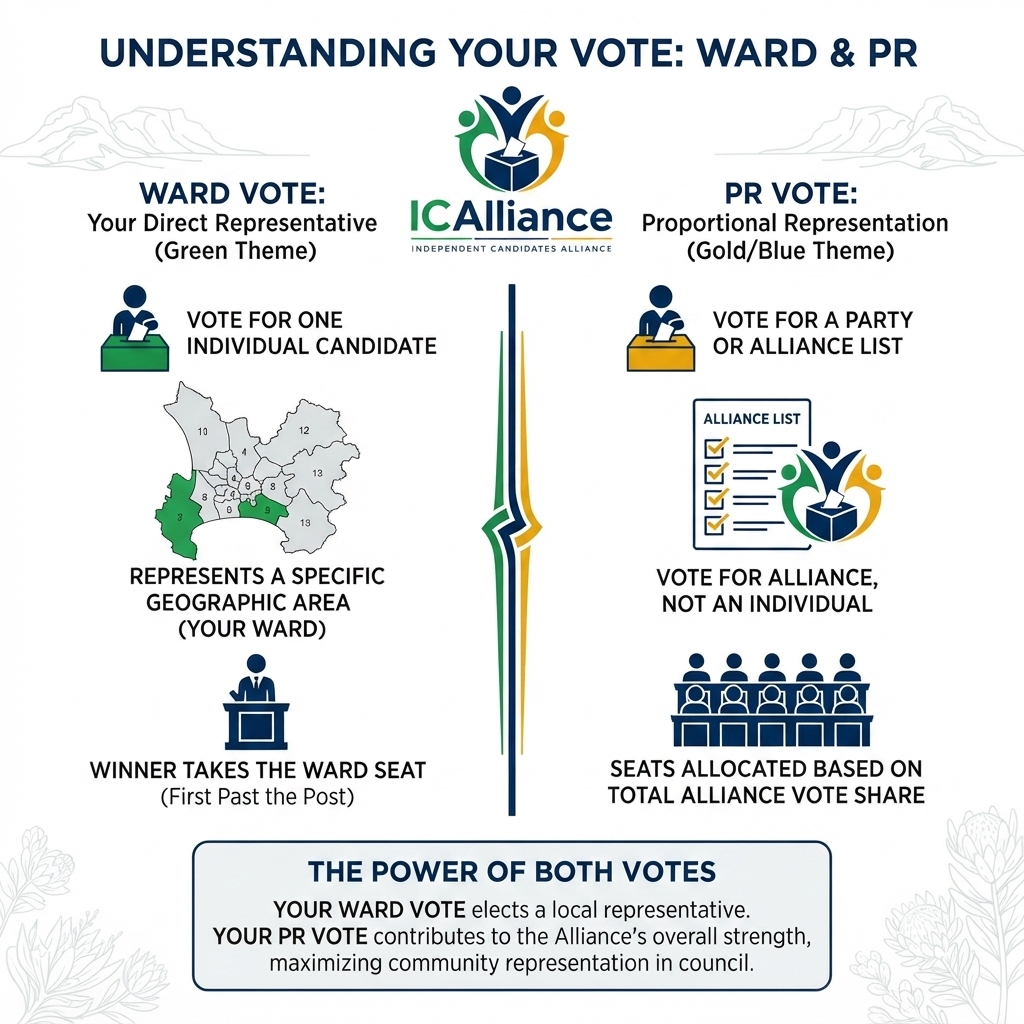
In a municipal election, you receive two ballots:
- The Ward Ballot: You vote for a specific candidate to represent your geographic ward. This can be a party-affiliated candidate or an independent candidate.
- The Proportional Representation (PR) Ballot: You vote for a political party. These votes are pooled to determine the total percentage of seats a party gets in the council.
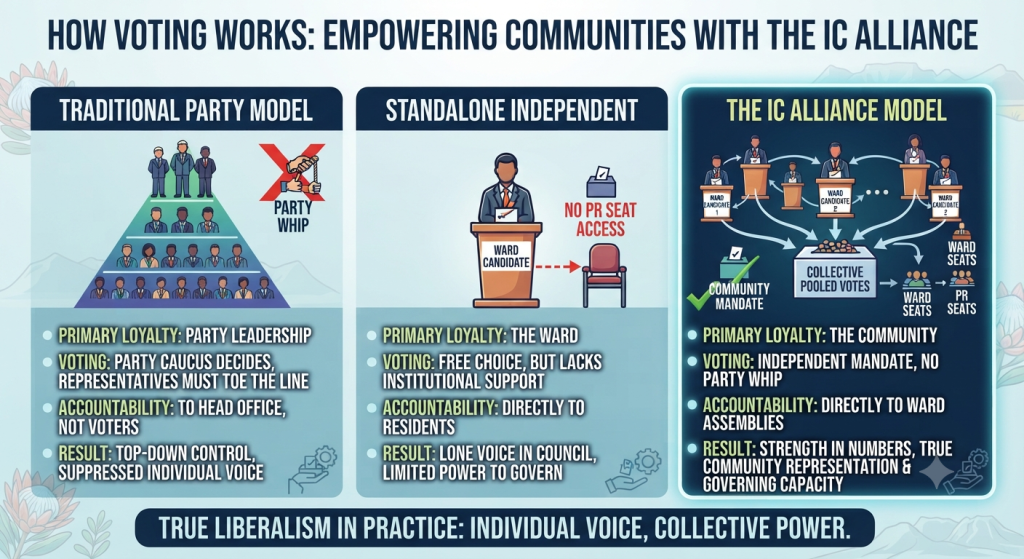
The Limitation of Independents: In the current system, if an independent candidate runs, they are only contesting for the single ward seat. If they do not win that ward, their votes do not contribute to the PR seat pool. This effectively “wastes” the votes of their supporters, as they cannot translate into additional seats in the council.
The IC Alliance Advantage
The IC Alliance is designed to overcome this structural disadvantage. By grouping independent-minded, community-focused candidates under one umbrella, we ensure that:
- Pooled Strength: Votes for IC Alliance candidates contribute to a single pool, allowing the alliance to secure PR seats in addition to any ward seats won.
- True Liberalism in Practice: Unlike traditional parties that force representatives to vote according to a “party line” (often decided in private caucuses before public council meetings), the IC Alliance model preserves the representative’s freedom to vote according to their ward’s mandate.
Infographic Concept: “The Power of the Collective”
| Feature | Traditional Party Model | Independent Candidate (Alone) | The IC Alliance Model |
| Accountability | To Party Leadership | To the Ward | To the Ward & Community |
| Voting Power | Party-controlled (“Whip”) | None (Lone voice) | Independent Choice |
| PR Seat Access | Yes | No | Yes (Pooled) |
| Primary Loyalty | The Party List | The Local Resident | The Local Resident |
The “Caucus” Problem vs. Our Solution
You are correct that traditional party politics often suppresses individual conscience through the “whip” system. In many parties, a caucus decides how everyone must vote before the council meeting even begins. If an individual representative disagrees, they are often forced to choose between their personal integrity and their party position.
This is the antithesis of the local representation we aim for. True liberalism emphasizes the individual’s right to represent their constituents’ interests above all else. By joining the IC Alliance, candidates retain their independence from top-down party commands while gaining the institutional “strength in numbers” required to actually influence council decisions and hold local government accountable.